
How it works
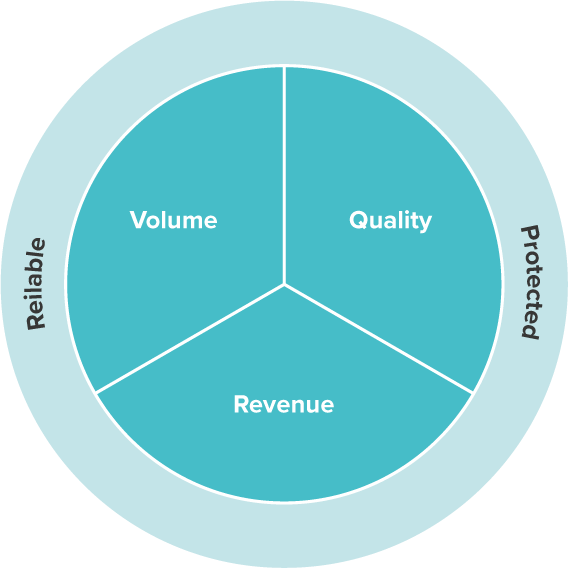
Uptime links non-repayable grant funding to drinking water service results through through standardised, transparent and scalable results-based contracts. Funding is linked to four key performance metrics:
Uptime (Reliability): The proportion of time that water infrastructure is working and available to users.
Water volume: The amount of water delivered to users.
Local revenue – what users pay for the service.
Water safety: Regular sanitary inspections, water quality testing and follow up actions to identify and manage drinking water safety risks.
These metrics assess the scale, reliability, use and perceived user value of a water service. We directly quantify delivered water benefits to users that are paying a share of service costs.
Built on data integrity
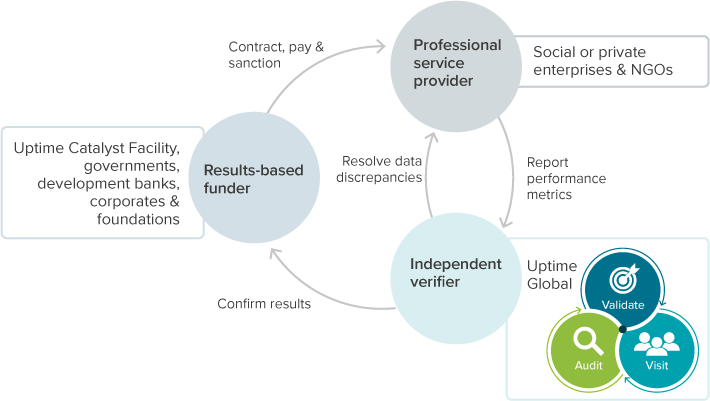
Uptime's results-based funding model is underpinned by a robust data integrity process, ensuring that reported performance is credible and funding is linked to verified results.
Our approach combines three complementary processes:
Validate: Every quarter, we review all reported performance data, identify inconsistencies and resolve discrepancies before payments are approved.
Audit: Each year, we examine a sample of supporting records, including maintenance logs, water meter readings, financial records and water quality assessments.
Visit: Annual site visits provide an additional check on reported performance through physical inspections and conversations with water users and service providers.
This process provides funders with confidence that payments reflect actual service delivery, while helping service providers improve their performance and data systems.
Learn more about how we developed and tested our model
Why it matters
Reliable and safe drinking water services require ongoing investment in operation, maintenance and water safety. Yet in rural areas, revenue from water users is often insufficient to cover these costs, leaving professional service providers with a critical funding gap.
Results-based funding helps address this challenge by linking financial support to measurable service delivery outcomes. This approach delivers three key benefits:

1. Meeting the funding gap
Results-based contracts provide professional service providers with predictable funding linked to performance, helping them maintain and expand essential drinking water services in areas where user payments alone cannot cover operating costs.
2. Improving service quality
By rewarding measurable results, contracts incentivise service providers to keep water infrastructure working, deliver sufficient water and actively manage water safety risks. This strengthens accountability and encourages continuous improvements in service quality.
3. Scaling through governments
Standardised contracts and independently verified results provide governments and development banks with a practical model for financing rural drinking water services at scale. By demonstrating reliable service delivery and value for money, results-based funding can help unlock long-term public financing and support the transition from individual projects to sustainable, nationally funded services.